 AION NETWORKSearch
Trotros in Ghana: A Day With the People Who Work at an Accra Station
An Accra transportation station offers a student journalist new perspectives on work, responsibility and ambition through conversations with local workers.

Personal reflection ·
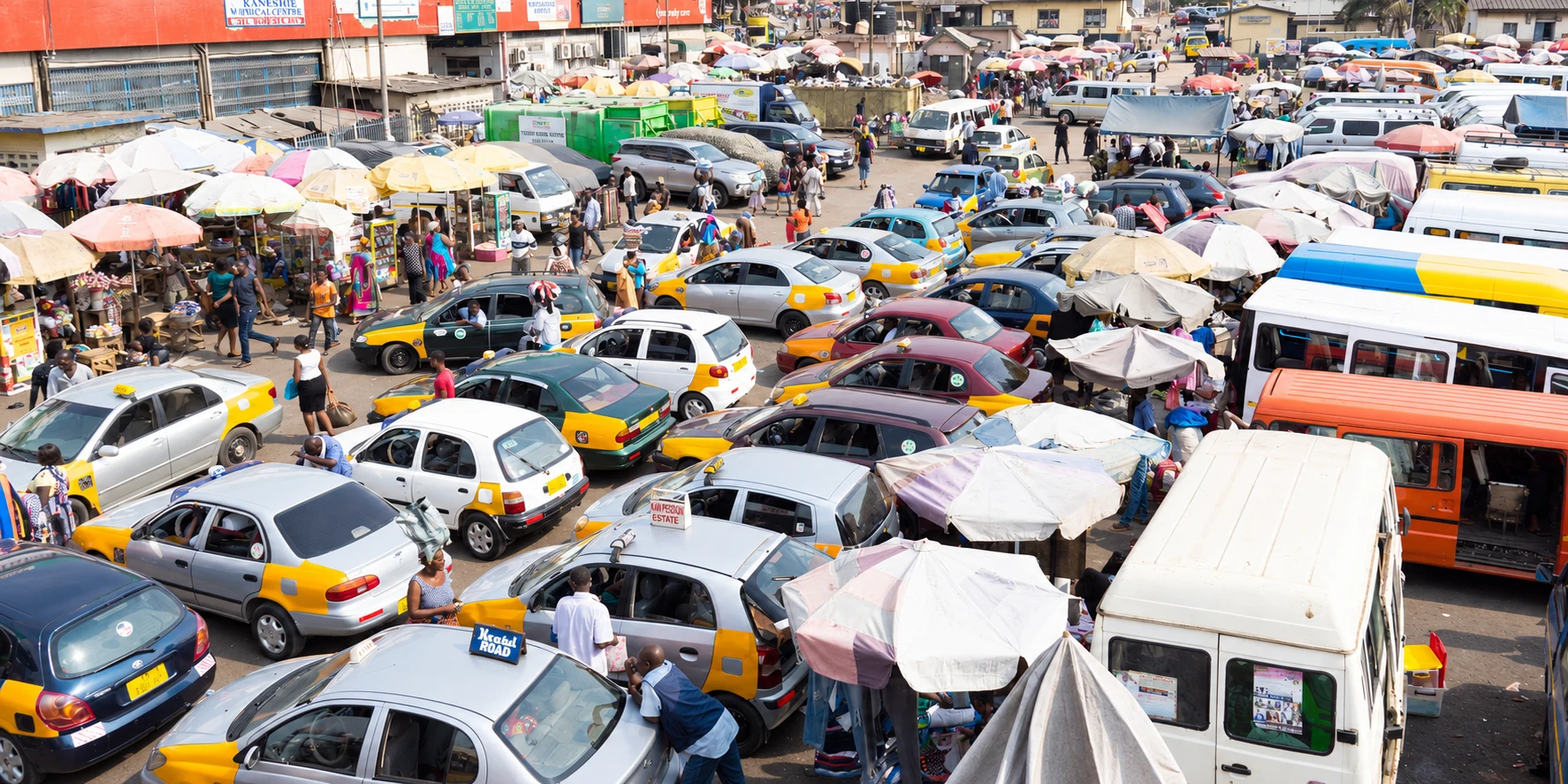
Trotros in Ghana are part of a working day that starts well before passengers take their seats. At a busy Accra transport station, I spoke with a commercial driver, a food vendor and an apprentice. Their stories changed how I think about what it takes to make a living.
On that fateful day, I decided to step away from my usual routine of attending lectures, spending time with friends and going about my normal activities. Instead, I headed to one of Accra’s transport hubs to observe how people went about their daily lives and, more importantly, interact with some of them, experience a different environment, listen to people’s stories and gain a better understanding of the challenges they face.
A closer look at an Accra trotro station
The station was already buzzing with activity when I arrived. Drivers called out to attract passengers, while conductors loudly announced their destinations. Traders moved between vehicles, hoping to sell their goods, as passengers hurried around looking for available seats. The atmosphere was noisy, crowded and full of movement. Everyone appeared to have somewhere to go and something important to attend to.
As I stood observing the activities around me, I realised that simply watching would not give me the full experience I was looking for. I needed to engage with the people and hear their stories directly.
A commercial driver’s perspective
My first conversation was with a commercial driver who had spent several years working in the transport business. I approached him, introduced myself and explained that I was a journalism student interested in understanding the everyday experiences of people in different occupations. He welcomed the conversation and was willing to share some of the realities of his work.
According to him, driving a commercial vehicle was far more demanding than many people imagined. Long working hours, rising fuel costs, vehicle maintenance and the daily pressure to make enough money were among the challenges he faced. He explained that, while some days brought in reasonable earnings, other days were disappointing, especially after deducting fuel and other operational expenses.
One thing that particularly caught my attention was his observation that passengers often saw drivers only as people sitting behind steering wheels, without considering the responsibilities and difficulties that came with the job. Listening to him made me realise that there is often more to a person’s occupation than what we see from the outside.
A food vendor’s working day at the Accra transport station
My next conversation was with a female food vendor operating a small business close to the station. She explained that her day usually began very early in the morning as she prepared food before the first customers arrived. Although she appreciated the independence that came with running her own business, she admitted that it was not always easy. The rising cost of food ingredients, unpredictable sales and the responsibility of managing both her business and family life made her work challenging. She had to remain committed even on days when business was slow.
Her story made me think about the many women working in Ghana’s informal sector. Beyond the meals they prepare and sell, many carry family responsibilities and financial pressures that customers may never know about. A simple purchase from a food vendor may look like an ordinary transaction, but behind it could be a long day of preparation, sacrifice and determination.
An apprentice’s hopes for the future
I also had the opportunity to speak with a young apprentice who was learning a trade. Unlike the driver and the food vendor, he was still at the early stages of building his career. He spoke with excitement about his ambition to become financially independent and eventually establish his own business. However, he understood that achieving this dream would not happen overnight. He acknowledged that it would require patience, discipline, hard work and sacrifice. His motivation was simple: he wanted to build a better future for himself and his family.
Although these three individuals had different occupations and were at different stages of life, their stories shared something in common. They were all working towards a better future despite the challenges surrounding them. Each person had a personal responsibility to fulfil and a reason to keep going.
Their experiences challenged some of the assumptions I had about work, success and people’s circumstances. It reminded me that a person’s worth cannot simply be measured by their job title, educational background or financial position. Sometimes, success is reflected in the determination to wake up every morning, face uncertainty and continue working towards a better life.
Lessons in listening and journalism
Beyond the personal lessons, the experience was also valuable to my development as a journalism student. It reminded me that journalism goes beyond observing events, gathering information and putting words together in an article. It requires curiosity, patience, good communication skills and the willingness to approach people, ask meaningful questions and listen carefully to their responses. I also came to appreciate that not every interesting story has to come from a major political event, a public figure or a high-profile institution. Ordinary people have experiences worth telling, and their everyday struggles, ambitions and achievements can provide important insights into society.
What may appear to be an ordinary day at a transport station can reveal stories about the economy, unemployment, the informal sector, family responsibilities and the determination of people trying to make ends meet. These are realities that deserve attention because they reflect the everyday experiences of many Ghanaians.
What I took away from those conversations
By the time I left the station, I had gained much more than material for a journalism assignment. I had listened to different perspectives on work, responsibility, ambition and survival. More importantly, I had been reminded that everyone has a story, even when it is not immediately visible.
Perhaps we spend too much time within our own social circles and too little time trying to understand the people around us. We pass strangers every day without knowing what they are going through, what they are working towards or the sacrifices they make to keep their lives moving.
That visit changed the way I looked at ordinary interactions. It taught me that sometimes, all it takes to understand another person’s world is the courage to approach them, start a conversation and genuinely listen. As I continue my journey in journalism, I hope to carry that lesson with me: behind every familiar or unfamiliar face is a story worth listening to.
The Ghana Statistical Service’s labour bulletin provides a wider picture of informal work. AION has also reported on local enterprise and employment in Northern Ghana.